THE TRILLION-DOLLAR BETRAYAL: MURRAY ROTHBARD WARNED US—AND WASHINGTON DIDN'T LISTEN
How America's Greatest Libertarian Economist Predicted the Iran Quagmire Decades Ago—And Why MAGA Must Heed His Warning Before It's Too Late
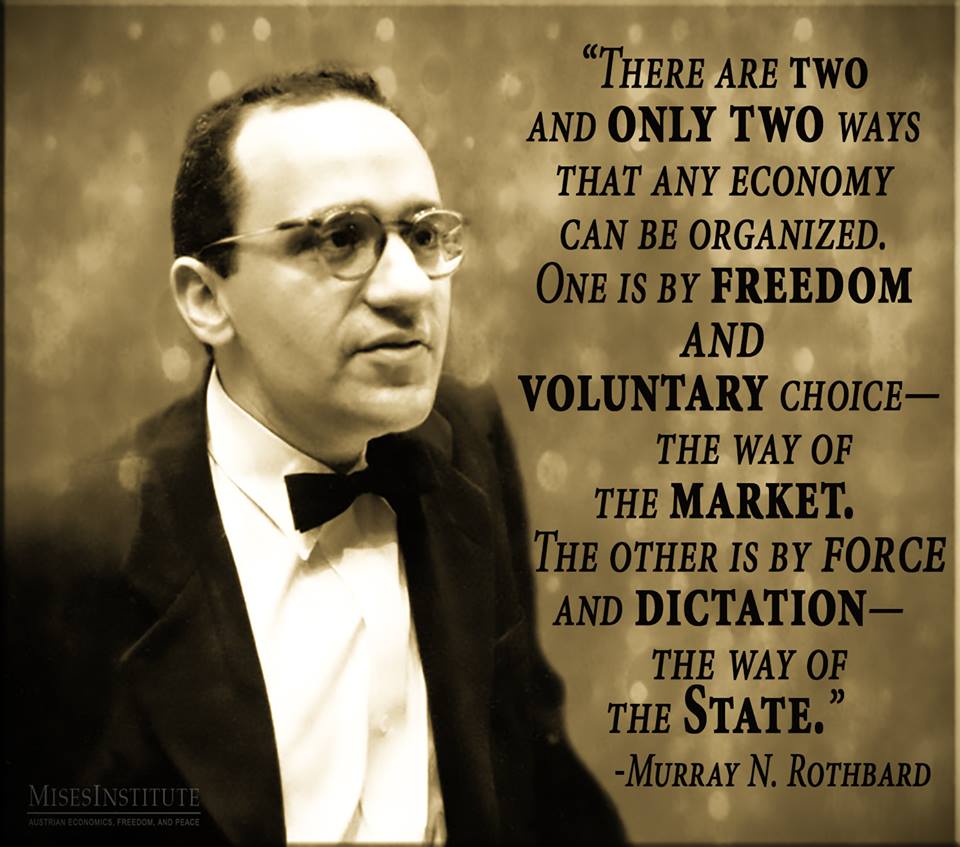
On the 100th Birthday of Murray N. Rothbard (1926–1995)
———
One hundred years ago today, Murray Newton Rothbard was born in the Bronx, New York. He would grow up to become the most uncompromising defender of individual liberty in American intellectual history—an economist, philosopher, and historian who spent four decades issuing warnings that Washington elites treated like background noise. Today, as Operation Epic Fury rains ordnance on over 2,000 targets across Iran and the Pentagon's burn rate hits $25–40 million per day, those warnings read less like theory and more like prophecy.
The cumulative price tag since June 2025: $6.35–8.55 billion for the United States alone. Add allied costs and the figure swells to $25.35–42.25 billion. Project the escalation scenarios—limited air campaigns at $100 million daily, full-scale engagement with potential Chinese involvement—and analysts at the Brown University Costs of War Project warn the total could approach the $2–7 trillion range, piled atop the $8 trillion America has already hemorrhaged on post-9/11 wars.
These are not abstract numbers. They are the mathematical evidence of what Rothbard diagnosed as a sickness at the heart of the American state—a government that feeds on conflict because conflict feeds the government.
"The State is a gang of thieves writ large."
— Murray N. Rothbard
That single sentence, perhaps his most famous, is the skeleton key to understanding everything unfolding in the Middle East right now. And it is the sentence that every MAGA voter, every America First patriot, every taxpayer watching their paycheck evaporate into cruise missiles should tattoo on their political consciousness.
In his essential book The Betrayal of the American Right, Rothbard traced how the original American Right—the 'Old Right' of Robert Taft, H.L. Mencken, Albert Jay Nock, and the great anti-New Deal coalition—was systematically hijacked by interventionist Cold Warriors who traded liberty for empire. These were men and women who opposed FDR not just on economics but on foreign entanglements. They understood what the Founders understood: that war is the health of the state, and that every bomb dropped abroad detonates the Bill of Rights at home.
The Old Right believed in what Rothbard called the non-aggression principle—that no individual or institution has the moral right to initiate force against another. This wasn't naïveté. It was the bedrock conviction of the American Revolution itself. And it was betrayed, systematically, by a conservative establishment that discovered something intoxicating about permanent war: it made them permanent rulers.
"Since the State necessarily lives by the compulsory confiscation of private capital, and since its expansion necessarily involves ever-greater incursions on private individuals and private enterprise, we must assert that the state is profoundly and inherently anti-capitalist."
— Murray N. Rothbard
Apply this to Iran. The $6.35–8.55 billion spent so far didn't materialize from thin air. It was confiscated—from the mechanic in Ohio, the rancher in Wyoming, the nurse in Florida. Every Tomahawk missile fired at Isfahan is a small business loan that will never be approved, a road that will never be paved, a child's education that will never be funded. The Pentagon calls it 'defense spending.' Rothbard called it what it is: organized theft redirected toward organized destruction.
———
Let's get specific, because the devil of this conflict lives in the spreadsheets. According to the comprehensive financial analysis published by AmericaFirstNews.us, the conflict has unfolded across four distinct phases, each more expensive than the last:
Phase 1—The 12-Day War (June 2025): $3.25–4.25 billion. Seven B-2 Spirit stealth bombers, 14 bunker-buster bombs at 30,000 pounds each, over 125 aircraft, and dozens of Tomahawk cruise missiles. The strike on Fordow, Natanz, and Isfahan alone cost an estimated $200 million in a single night.
Phase 2—The Diplomatic Pause (July–December 2025): Billions in sustainment costs while Oman-mediated talks in Geneva went nowhere. The military-industrial complex was patient. It knew the pause was temporary.
Phase 3—The Buildup (January–February 2026): $1–1.8 billion. Two carrier strike groups, 50+ fighter jets, 16 warships, 40,000 troops. The largest Middle East deployment since Iraq 2003. Daily burn rate: $25–40 million.
Phase 4—Operation Epic Fury (February 28–Present): ~$2 billion in the first 72 hours alone. Over 2,000 targets struck across Tehran, Isfahan, Qom, Karaj, and Kermanshah. The opening salvo killed Supreme Leader Khamenei—and opened a Pandora's box of regional chaos.
Iran retaliated by striking U.S. bases across the Gulf—Al Udeid in Qatar, Camp Arifjan in Kuwait, Fifth Fleet Headquarters in Bahrain. Saudi Aramco's Ras Tanura refinery was hit. Oil prices surged 6–9%. In a grotesque irony, Kuwaiti forces shot down three American fighter jets in a friendly-fire incident. The human toll: 36–48 coalition military personnel killed, including 3–4 Americans.
Rothbard would not have been surprised by a single line of this ledger.
"The State uses its coerced revenue, not merely to monopolize and provide genuine services inefficiently to the public, but also to build up its own power at the expense of its exploited and harassed subjects."
— Murray N. Rothbard
———
The most alarming section of the AmericaFirstNews.us analysis isn't what has already been spent—it's the projection of where this heads. The scenarios read like a fiscal horror novel:
Continued airstrikes (current trajectory): $300–800 billion over 6–18 months at $100–250 million per day.
Ground invasion: $500 billion–$1.5 trillion. Iran's terrain and 88 million people make Iraq look like a warmup exercise.
China enters the picture: $4–7 trillion. If Beijing provides material support to Tehran—or worse, opens a second front—the entire post-WWII global order fractures, and American taxpayers foot the bill for a generation.
The trillion-dollar threshold: Analysts estimate it could be breached in as little as 8 months under aggressive escalation scenarios.
Stack this against the peace scenarios: de-escalation and diplomatic resolution could save $150–400 billion. A UN-stabilized withdrawal could prevent the cascading costs of occupation. But conservative hawks—the very people Rothbard identified as betrayers of the Right—resist peace because peace diminishes their power.
"There is no reason to assume that a compulsory monopoly of violence, once acquired by any State rulers, will remain 'limited' to protection of person and property. Certainly, historically no government has long remained 'limited' in this way."
— Murray N. Rothbard
———
The genius of Rothbard was not merely economic—it was moral. He understood that the machinery of war corrupts everything it touches: budgets, liberties, truth itself. His intellectual mentor, Ludwig von Mises, the titan of Austrian economics, argued that centralized planning and intervention distort economic signals, leading to cascading inefficiency and coercion. War, in Mises's framework, is the ultimate market distortion—the government commandeering resources on a scale that no private enterprise would survive.
Consider the Iran conflict through this lens. The war has disrupted global oil markets, driving prices up 6–9%. It threatens GDP contractions of 0.3–0.5% in the United States and 2–3% regionally. It has created a projected $2–3 trillion in future veterans' care obligations that will burden American taxpayers for decades. Every dollar spent on this conflict is a dollar stolen from the productive economy—from innovation, from entrepreneurship, from the voluntary exchanges that actually create wealth.
"On the free market, it is a happy fact that the maximization of the wealth of one person or group redounds to the benefit of all; but in the political realm, the realm of the State, a maximization of income and wealth can only accrue parasitically to the State and its rulers at the expense of the rest of society."
— Murray N. Rothbard
This is the great unspoken scandal of the Iran war: it is a massive wealth transfer. Not from America to Iran. From the American people to the military-industrial complex—the defense contractors, the weapons manufacturers, the intelligence agencies, the consultants and lobbyists who populate the Beltway like parasites on a host organism. Lockheed Martin doesn't care whether Tomahawks hit their targets. They care that Tomahawks get ordered. Rothbard saw this with crystalline clarity:
"Government was constructed neither for ability nor for the exercise of loving care; government was built for the use of force and for necessarily demagogic appeals for votes."
— Murray N. Rothbard
———
Here is the truth that the Republican establishment does not want you to hear: Murray Rothbard was the original America First thinker. Decades before the phrase became a political slogan, he articulated its deepest principles—not as nationalism, but as the logical consequence of individual liberty. If you believe in limited government, sound money, and the sovereignty of the American citizen over the American state, then Rothbard is your intellectual ancestor, whether you know it or not.
"The libertarian creed, finally, offers the fulfillment of the best of the American past along with the promise of a far better future. Libertarians are squarely in the great classical liberal tradition that built the United States and bestowed on us the American heritage of individual liberty, a peaceful foreign policy, minimal government, and a free-market economy."
— Murray N. Rothbard
Read that again. A peaceful foreign policy. Minimal government. A free-market economy. That is the MAGA platform at its purest—stripped of the neoconservative barnacles that have attached themselves to the movement like remoras on a shark. The Iran war is not America First. It is Empire First. It is Raytheon First. It is the Washington Swamp First. It is everything that the populist revolt of 2016 was supposed to end.
Rothbard warned us that the great betrayal of the American Right was its capitulation to permanent war. The Cold War gave conservatives a pretext to abandon limited government. The War on Terror extended that pretext for another generation. Now Iran threatens to extend it for another.
"We must, therefore, emphasize that 'we' are not the government; the government is not 'us.' The government does not in any accurate sense 'represent' the majority of the people."
— Murray N. Rothbard
Ask yourself: Did you vote for $8 billion in Iran war spending? Did your congressman run on a platform of $25–40 million per day in Middle East operational costs? Did anyone in Washington ask the mechanic, the rancher, or the nurse whether they'd prefer cruise missiles or lower taxes? The answer, of course, is no. Because as Rothbard understood, the state does not ask. It takes.
"Only the State obtains its revenue by coercion. That coercion is known as 'taxation,' although in less regularized epochs it was often known as 'tribute.' Taxation is theft, purely and simply even though it is theft on a grand and colossal scale which no acknowledged criminals could hope to match."
— Murray N. Rothbard
———
Beyond the dollars—and the dollars are staggering—there is the moral dimension that Rothbard insisted we confront. Three to four American service members killed. Thirty-eight to thirty-nine Israeli soldiers dead. Thousands of Iranian civilians caught in the crossfire. Seven thousand Iranian protesters massacred by their own government before a single American bomb fell. And now the entire region teeters on the edge of a wider conflagration that could dwarf anything since the Second World War.
"The essential activities of the State necessarily constitute criminal aggression and depredation of the just rights of private property of its subjects, including self-ownership."
— Murray N. Rothbard
Self-ownership. That is the foundation of everything. The young Marine stationed on a carrier in the Persian Gulf owns his own life. The Iranian shopkeeper in Isfahan owns his. The Saudi engineer at Ras Tanura owns his. Yet all of them have been conscripted—by force or by circumstance—into a conflict designed not to protect their rights but to expand the power of states that view them as expendable inputs in a geopolitical equation.
This is what Rothbard meant when he wrote that the State is inherently illegitimate. Not because government cannot occasionally do useful things, but because its fundamental method—coercion—makes it structurally incapable of respecting the sovereignty of the individuals it claims to serve.
"If you wish to know how libertarians regard the State and any of its acts, simply think of the State as a criminal band, and all of the libertarian attitudes will logically fall into place."
— Murray N. Rothbard
———
Murray Rothbard would have turned 100 today. He did not live to see the Iraq debacle, the Afghanistan quagmire, or the Iran escalation. But he predicted every one of them with the precision of a man who understood that states do what states do—they grow, they consume, they war—unless citizens find the courage to say: enough.
The MAGA movement was born of that courage. It was a rebellion against a political class that enriched itself at the expense of the people it governed. It was a demand for accountability, for sovereignty, for the radical notion that America's wealth belongs to Americans—not to nation-builders, not to defense contractors, not to the architects of perpetual conflict.
Rothbard's message to this movement, were he alive to deliver it, would be simple and devastating: You cannot drain the swamp while feeding the war machine. You cannot be America First while spending America's treasure on someone else's revolution. You cannot champion the forgotten man while sending his sons and daughters to die in wars that serve no one but the state.
"It is no crime to be ignorant of economics, but it is totally irresponsible to have a loud and vociferous opinion on economic subjects while remaining in this state of ignorance."
— Murray N. Rothbard
The Iran conflict is not merely a foreign policy failure. It is an economic catastrophe. It is a constitutional crisis. It is the latest and most expensive chapter in the betrayal that Rothbard documented with meticulous, unflinching scholarship. The path out is the same one the Old Right charted before the Cold Warriors corrupted it: bring the troops home, balance the books, restore the republic, and trust free people to build a free economy.
Anything less is a betrayal—of Rothbard's legacy, of the American founding, and of the 330 million citizens whose labor is being converted, at a rate of $25–40 million per day, into rubble in a desert 6,000 miles from home.
Happy 100th birthday, Murray. We're sorry we didn't listen sooner.
———
Sources: Brown University Costs of War Project; Center for New American Security (CNAS); SIPRI; Taxpayers for Common Sense; Atlantic Council; Pentagon Press Briefings; AmericaFirstNews.us Comprehensive Financial Analysis (March 2, 2026); Murray N. Rothbard, The Betrayal of the American Right (Mises Institute); Gary Galles, '33 Choice Quotes from the Great Murray Rothbard' (Mises.org, March 2, 2026).
NOETIC DHARMA GROUP™
CONFIDENTIAL & PROPRIETARY © 2025 Noetic Dharma Group, LLC | www.noeticdharma.com