For more than a century, tens of millions of American Christians have been taught that unconditional political support for the modern State of Israel is a biblical mandate—that the Jewish people remain God’s exclusively “chosen people,” that criticism of Israeli policy invites divine wrath, and that the restoration of Greater Israel is a prerequisite for Christ’s return. These beliefs now form the bedrock of American foreign policy in the Middle East, the theological justification for billions in annual military aid, and the moral framework through which evangelical voters evaluate political candidates.
But these doctrines are not ancient. They are not apostolic. They do not represent the consensus of Christian theology across two millennia. They are, in fact, remarkably modern—traceable to a single annotated Bible published in 1909 by a disgraced lawyer with no seminary degree, questionable funding sources, and deep connections to early Zionist political operatives.
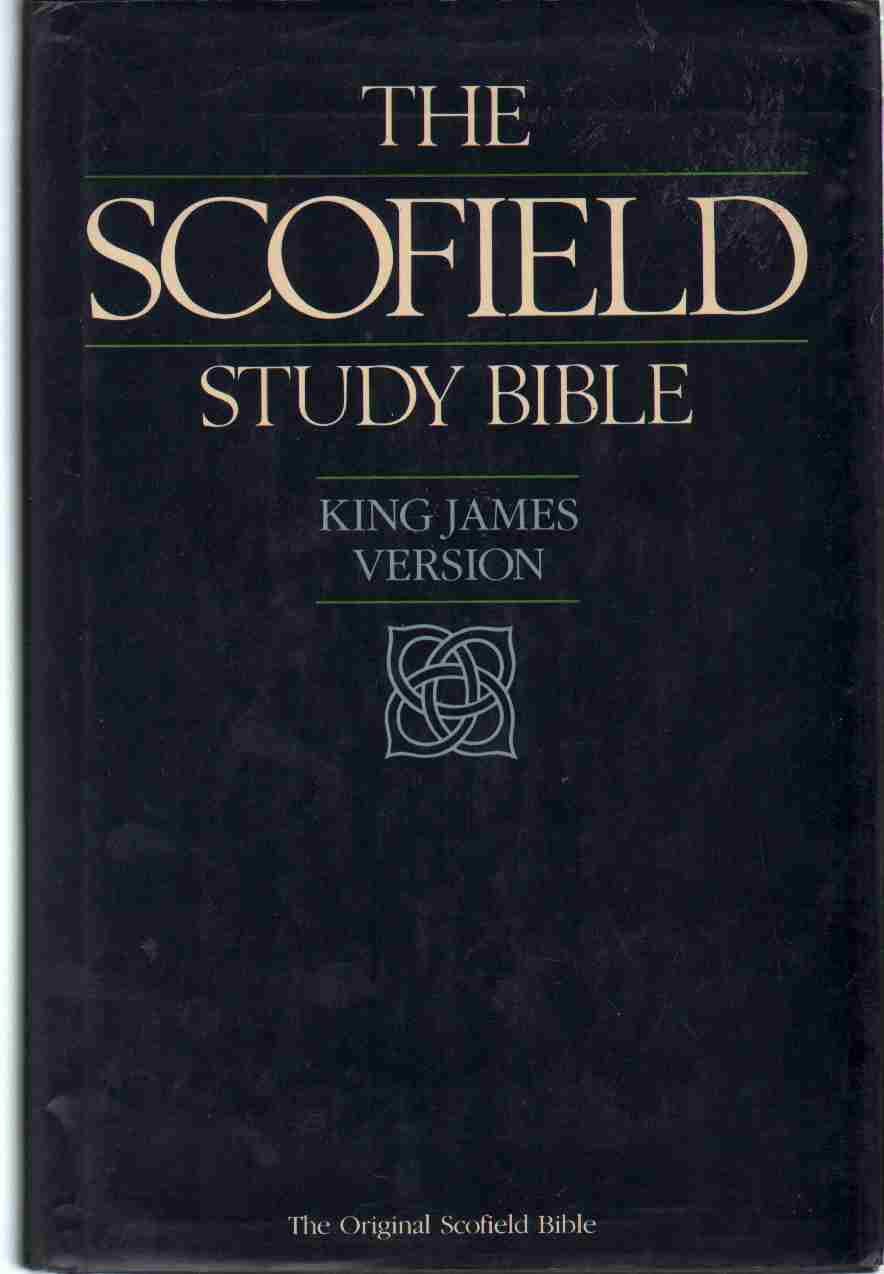
This is the story of the Scofield Reference Bible: how it was created, who funded it, what it actually changed in Christian theology, and why it matters more today than at any point in its 117-year history. This is not an attack on Jewish people. It is an examination of how a specific political ideology—Zionism—captured American Protestant theology through a single publishing project and turned sincere Christian faith into an instrument of geopolitical power.
• • •
To understand the magnitude of what the Scofield Bible changed, one must first understand what it replaced. From the earliest days of Christianity through the Protestant Reformation and well into the 19th century, the overwhelming consensus of Christian theology held a straightforward position on the relationship between Israel and the Church: Jesus Christ fulfilled the promises made to Israel, and the Church—composed of all believers, Jew and Gentile alike—is the continuation and completion of God’s covenant people.
This was not a marginal view. It was the position of the Church Fathers, the medieval theologians, the Protestant Reformers, and virtually every major Christian tradition—Catholic, Orthodox, Lutheran, Reformed, Anglican, and Presbyterian—for nearly two millennia.
The Biblical Foundation
The New Testament is explicit on this point. In Galatians 3:28–29, Paul writes that in Christ there is neither Jew nor Greek, and that all who belong to Christ are Abraham’s seed and heirs according to the promise. First Peter 2:9 applies the language of Exodus 19—“a chosen race, a royal priesthood, a holy nation”—directly to the Church. Hebrews chapters 7 through 10 argue at length that the old covenant is obsolete, replaced by a better covenant mediated by Christ. Romans 9:6–8 explicitly states that not all who are descended from Israel belong to Israel, and that it is the children of the promise, not the children of the flesh, who are counted as Abraham’s offspring.
Jesus Himself, in Matthew 21:43, warned the religious leaders of His day that the kingdom of God would be taken from them and given to a people producing its fruits. In Matthew 23, He pronounced a devastating series of judgments on the Pharisees and their institutional power structure.
The Reformers’ Position
Martin Luther, John Calvin, John Knox, and the entire Reformed tradition understood the Church as the true Israel of God. Calvin wrote extensively that the promises made to Abraham find their ultimate fulfillment in Christ and in the community of faith that bears His name. The Westminster Confession of Faith (1646), the foundational document of Presbyterian theology, articulated what is known as covenant theology: there is one covenant of grace administered differently across Old and New Testaments, but the people of God are fundamentally one people, united by faith.
As Reformed theologian R. Scott Clark has written, covenant theology does not teach that God abandoned His promises to Israel, but rather that those promises find their fulfillment in Christ and His Church. The category of “replacement” is itself foreign to Reformed theology—it assumes a dispensational framework that the historic Church never held.
This was the unbroken consensus of Christianity for eighteen centuries. Then, in the 1830s, everything changed.
• • •
In 1827, an Anglo-Irish Anglican priest named John Nelson Darby suffered a serious horse-riding accident that left him bedridden for months. During his recovery, Darby embarked on an intense study of Scripture and emerged with a set of theological conclusions that would have been unrecognizable to any Christian who had lived in the previous eighteen centuries.
Darby’s core innovation was the doctrine of dispensationalism: the idea that God’s dealings with humanity are divided into distinct periods or “dispensations,” and—critically—that God maintains two entirely separate programs: one for Israel and one for the Church. Under this framework, the Church is not the fulfillment of Israel’s promises but rather a “parenthesis” in God’s plan, a temporary detour that will end when Christ raptures the Church and resumes His dealings with national Israel.
This was, by any historical standard, a radical departure. As Presbyterian minister John Wick Bowman later wrote, the Scofield Bible—which would codify Darby’s system—represented what many considered the most dangerous heresy to emerge within Christian circles. Philip Mauro, writing in 1928, called dispensationalism a subtle form of modernism that evangelical Christianity needed to purge from its ranks. Harry Ironside, a dispensationalist sympathizer, acknowledged in 1908 that this rapture theology was scarcely to be found in a single book or sermon across sixteen hundred years of church history prior to Darby.
Darby left the Anglican Church, helped found the Plymouth Brethren movement, and spent decades traveling Europe and North America promoting his new framework. His ideas gained traction at prophecy conferences and Bible institutes, but they remained a minority position within broader Christianity. What they needed was a vehicle for mass adoption.
That vehicle arrived in 1909.
• • •
Cyrus Ingerson Scofield was born in Michigan in 1843, served briefly in the Confederate Army during the Civil War, and went on to become a Kansas politician and lawyer. His early career was defined not by theological scholarship but by scandal.
In 1873, at the age of 29, Scofield was appointed U.S. District Attorney for Kansas—the youngest in the country at the time. He was forced to resign that same year under what contemporaries described as a cloud of scandal, involving allegations of financial fraud, forged signatures on bank notes, and the misappropriation of political contributions. The Atchison Patriot, a local newspaper, described him years later as a former lawyer, politician, and what the paper called a shyster, recounting multiple instances of forgery that had resulted in a six-month jail sentence in St. Louis.
Scofield reported a conversion to Christianity in 1879 and, without any formal theological training or seminary education, quickly established himself as a Bible teacher and conference speaker. He pastored a Congregational church in Dallas, became involved in the Bible conference circuit, and began developing the idea for an annotated reference Bible that would embed dispensationalist commentary directly alongside the biblical text.
The Lotos Club Connection
In 1901, Scofield was admitted to the Lotos Club, an elite, invitation-only social club in Manhattan that catered to New York’s literary and financial establishment. This membership has drawn sustained scholarly attention because it is difficult to explain how a middle-class preacher from Dallas gained entry to one of the most exclusive clubs in America.
Joseph M. Canfield, in his biography The Incredible Scofield and His Book, concluded that Scofield’s admission to the Lotos Club could not have been sought by Scofield himself, and that someone was directing his career. Canfield identified this someone as being associated with Samuel Untermeyer, a powerful Wall Street lawyer and committed Zionist who served on the club’s committee. Untermeyer later became chairman of the American Jewish Committee, president of the American League of Jewish Patriots, and chairman of the Non-Sectarian Anti-Nazi League.
Professor David W. Lutz, in his paper “Unjust War Theory: Christian Zionism and the Road to Jerusalem,” wrote that Untermeyer used Scofield to inject Zionist ideas into American Protestantism, and that Untermeyer and other wealthy Zionists promoted and funded Scofield’s career, including his travels in Europe. It was on one of these European trips that Henry Frowde of Oxford University Press expressed immediate interest in publishing Scofield’s reference Bible project.
Whether one views these connections as a coordinated campaign or a convergence of interests, the documented facts are these: a man with no formal theological training, a documented history of fraud, and unexplained financial resources produced the most influential study Bible in American history, published by the world’s most prestigious university press, with the active support of prominent Zionist figures.
• • •
The Scofield Reference Bible was first published in 1909 and revised in 1917. A further revision was published by Oxford University Press in 1967, and updated editions continue to be printed today. What made it revolutionary was not its biblical text—it used the standard King James Version—but its annotations. For the first time since the Geneva Bible of 1560, a commentary appeared on the same page as the Scripture, positioned so that readers would absorb Scofield’s interpretive framework as though it were part of the inspired text itself.
The key theological moves embedded in Scofield’s notes were:
1. The Israel-Church Distinction
Scofield’s notes consistently maintained that Israel and the Church are two entirely separate entities with separate destinies. The promises made to Abraham and his descendants in the Old Testament, according to Scofield, belong exclusively to national, ethnic Israel and cannot be applied to the Church. This directly contradicted the understanding of Paul, the Church Fathers, the Reformers, and the entire historic Christian tradition.
2. The Reinterpretation of Genesis 12:3
Perhaps the single most consequential annotation in the Scofield Bible is its commentary on Genesis 12:3, where God tells Abraham that He will bless those who bless him and curse those who curse him. Scofield’s note interprets this promise as an unconditional, permanent decree applying to the Jewish people as a whole throughout all of history. His annotation states that it has invariably gone ill with nations that have persecuted the Jewish people and well with those who have protected them.
The 1967 New Scofield Study Bible went further, adding the explicit statement that for a nation to commit the sin of anti-Semitism brings inevitable judgment. As Rev. Dr. Stephen Sizer has documented, this annotation more than any other factor has induced generations of American evangelicals to believe that God demands their unconditional support for the modern State of Israel.
The traditional Christian reading of Genesis 12:3, by contrast, understands the promise as fulfilled in Christ. As Paul writes in Galatians 3:8, the Scripture foresaw that God would justify the Gentiles by faith and announced the gospel in advance to Abraham, saying that all nations would be blessed through him. The blessing is the gospel itself—not a geopolitical mandate to support a particular nation-state.
3. The Dispensational Framework
Scofield divided all of biblical history into seven dispensations—Innocency, Conscience, Human Government, Promise, Law, Grace, and the Kingdom—and embedded this framework throughout his annotations. This created the impression that the dispensational reading was simply what the Bible itself taught, rather than a specific interpretive lens imposed upon it. The effect was that millions of readers internalized Darby’s 1830s theology as though it were apostolic doctrine.

4. Eschatological Zionism
Scofield’s notes on prophetic and apocalyptic passages consistently pointed readers toward a future in which national Israel would be restored, the Jewish temple rebuilt, and the modern Jewish people would play the central role in end-times events. This created a theological framework in which the political restoration of Israel was not merely a geopolitical event but a divine imperative—and any opposition to it was opposition to God’s plan.
• • •
The Scofield Reference Bible was not a marginal publication. It was a phenomenon. Sales exceeded two million copies by the end of World War II. It became the standard study Bible for American fundamentalists and evangelicals throughout the 20th century. It was the primary text used at Moody Bible Institute, Dallas Theological Seminary, and dozens of other institutions that trained generations of American pastors.
Its influence cascaded through popular culture. Hal Lindsey’s The Late Great Planet Earth (1970), which sold over 28 million copies, was essentially a popularization of Scofield’s dispensational framework. Tim LaHaye’s Left Behind series, which sold over 80 million copies, dramatized the same eschatological scheme. John Hagee’s Christians United for Israel, the largest pro-Israel organization in the United States with over 10 million members, operates on theological premises drawn directly from Scofield’s annotations.
The political consequences have been enormous. Dispensationalist theology shaped the worldviews of Presidents Truman, Johnson, Reagan, and George W. Bush. A Pew Forum survey found that 60 percent of American evangelicals view supporting Israel as a religious obligation. As Sizer has argued, Christian Zionism is in many ways primarily a Christian movement, not a Jewish one—nine out of ten Zionists, by his estimate, are Christians, and the Restorationist movement among Christians preceded Jewish Zionism by fifty years.
• • •
The phrase “chosen people” has become perhaps the most misunderstood concept in all of Christian theology. Dispensationalists use it to argue that the Jewish people possess a permanent, unconditional, ethnically-based status before God that supersedes the New Covenant. This claim deserves careful biblical examination.
The Old Testament Context
In the Old Testament, Israel’s “chosenness” was real but conditional and purposive. God chose Abraham to be the vehicle through which blessing would come to all nations (Genesis 12:3). He chose Israel to be a priestly nation and a light to the Gentiles (Exodus 19:5–6; Isaiah 49:6). This election was never about ethnic superiority—it was about vocation. Israel was chosen for a mission, and the prophets consistently warned that failure to fulfill that mission would result in judgment (Amos 3:2; Jeremiah 7:1–15).
Jesus and the New Covenant
Jesus of Nazareth—Himself a Jew, born under the Law, fulfilling the promises made to Abraham—explicitly redefined who constitutes the people of God. In Matthew 21:43, He told the religious leaders that the kingdom would be taken from them and given to a people producing its fruits. In John 8:39–44, He told Jewish leaders who claimed Abraham as their father that if they were Abraham’s children, they would do what Abraham did—implying that biological descent alone was insufficient.
At the Last Supper, Jesus declared a new covenant in His blood (Luke 22:20), fulfilling the prophecy of Jeremiah 31:31–34. The entire book of Hebrews argues that this new covenant makes the old covenant obsolete (Hebrews 8:13). The author of Hebrews does not say the old covenant was suspended or paused—he says it is made obsolete.
Paul’s Definitive Teaching
Paul, the apostle to the Gentiles, provides the most systematic treatment. In Romans 2:28–29, he writes that a person is not a Jew who is one outwardly, nor is circumcision merely outward and physical; rather, a person is a Jew who is one inwardly, and circumcision is a matter of the heart. In Romans 9:6–8, he explicitly states that not all who are descended from Israel belong to Israel, and that it is the children of the promise—not the children of the flesh—who are counted as offspring.
In Galatians 3:28–29, Paul writes that in Christ there is no distinction between Jew and Greek, and that all who belong to Christ are Abraham’s seed and heirs according to the promise. In Ephesians 2:14–16, he writes that Christ has broken down the dividing wall of hostility between Jew and Gentile, creating one new humanity.
The consistent New Testament teaching is clear: the coming of Christ universalized the covenant. The “chosen people” are now all who are in Christ, regardless of ethnicity. This was the position of the entire Christian Church for eighteen centuries—until Darby and Scofield introduced a framework that reversed it.
• • •
It is essential to distinguish between Jewish people, Judaism as a faith tradition, and Zionism as a political ideology. Millions of Jewish people around the world—including prominent organizations like Jewish Voice for Peace, IfNotNow, and historically significant groups like the American Council for Judaism—have either opposed or expressed deep reservations about political Zionism. Many Orthodox Jewish communities, including the Satmar Hasidim and Neturei Karta, hold that the establishment of a Jewish state through political means before the coming of the Messiah is itself a violation of Torah.
Political Zionism, founded by Theodor Herzl in the 1890s, is a nationalist movement seeking Jewish sovereignty over historic Palestine. It has always required Christian support to achieve its objectives, particularly in the United States and Britain. The theological framework provided by dispensationalism and codified by the Scofield Bible gave Zionism something it desperately needed: a moral and spiritual justification that resonated with the largest religious demographic in the Western world.
The documented connections between early Zionist operatives and the production of the Scofield Bible—including the Untermeyer relationship, the unexplained funding, the Lotos Club membership, and the Oxford University Press publication—suggest that these political actors understood the strategic value of reshaping Christian theology. Whether one calls this a conspiracy or simply a convergence of interests, the result was the same: American Christianity was reprogrammed to serve the objectives of a political movement that many Christians, and many Jews, considered incompatible with biblical faith.
Rev. Dr. John Stott, one of the most influential evangelical leaders of the 20th century and the principal framer of the Lausanne Covenant, wrote that he believed Zionism, both political and Christian, is incompatible with biblical faith. Canon Naim Ateek, a Palestinian Christian and founder of the Sabeel Ecumenical Liberation Theology Center, called Christian Zionism a destructive movement whose theology is killing Palestinian Christians.
• • •
The real-world consequences of the Scofield Bible’s theological revolution have been staggering:
In foreign policy: The United States has provided an estimated $300 billion in total aid to Israel since 1948 (adjusted for inflation), making it the largest cumulative recipient of U.S. foreign assistance. Much of the political support for this aid comes from evangelical Christian voters operating under Scofield’s theological framework.
In the Middle East: Palestinian Christians—who trace their communities to the earliest days of the Church—have been systematically displaced, marginalized, and in many cases killed, while American Christians cheer the expansion of a state they believe has a divine mandate. The Christian population of historic Palestine has declined from approximately 20 percent in 1948 to less than 2 percent today.
In American Christianity: Dispensationalism has distorted Christian ethics by creating a framework in which an entire nation-state is immune from moral criticism. It has divided the body of Christ between those who hold to historic Christian theology and those who have adopted a 19th-century innovation as though it were apostolic truth. It has made American Christianity complicit in policies that many of the faith’s most respected voices—from John Stott to Gary Burge to Munther Isaac—have called incompatible with the teachings of Jesus.
In theology itself: The Scofield Bible effectively reversed the message of the New Testament by reinstating a framework in which ethnic identity determines spiritual standing before God—precisely the error that Paul spent his apostolic career combating.
• • •
The Scofield Reference Bible did not change the words of Scripture. It did something more subtle and more effective: it changed how those words were understood. By embedding a specific theological commentary on the same page as the biblical text, printed by the most authoritative university press in the English-speaking world, it created a generation of Christians who could not distinguish between what the Bible said and what Scofield told them it meant.
The doctrine that the Jewish people are God’s permanently and exclusively “chosen people”—in a sense that overrides the New Covenant, exempts a modern nation-state from moral accountability, and requires unconditional political allegiance from Christians—is not found in Scripture. It is found in Scofield’s annotations. It is a product of a 19th-century theological innovation, promoted by a man with no academic credentials and documented connections to political Zionist operatives, and mass-distributed through a publishing operation whose funding sources remain partially obscure.
For eighteen centuries, Christianity taught that Jesus Christ is the fulfillment of God’s promises to Israel, that the Church is the true Israel of God, and that in Christ there is neither Jew nor Greek. The Scofield Bible reversed this teaching and, in doing so, transformed American Christianity into the most powerful engine of Zionist political support in the world.
This is not an attack on Jewish people. Millions of Jews reject political Zionism. This is not a denial of Jewish suffering or the horrors of antisemitism, which Christians have a moral obligation to oppose. This is an argument that a specific political ideology—working through a specific theological vehicle—hijacked the faith of millions of sincere believers and turned it into something that the apostles would not recognize.
The question every Christian must now ask is simple: Do you follow the Bible, or do you follow Scofield’s annotations?
• • •
c. 30–33 AD – Jesus establishes the New Covenant. The early Church understands itself as the continuation and fulfillment of Israel’s promises.
1st–4th centuries – Church Fathers (Justin Martyr, Irenaeus, Augustine) consistently teach the Church as the true Israel of God.
1517–1648 – The Protestant Reformation. Luther, Calvin, and the Reformed tradition affirm covenant theology: one people of God, continuous from Abraham through Christ.
1646 – Westminster Confession of Faith codifies covenant theology as the standard Reformed position.
1827–1830s – John Nelson Darby develops dispensationalism after a riding accident. Introduces the Israel-Church distinction and pre-tribulation rapture.
1876–1897 – Niagara Bible Conferences spread dispensationalist ideas across American evangelicalism.
1897 – Theodor Herzl convenes the First World Zionist Congress in Basel, Switzerland. Political Zionism is formally established.
1901 – Scofield admitted to the Lotos Club in New York. Connection to Samuel Untermeyer and Zionist circles documented.
1909 – Oxford University Press publishes the first edition of the Scofield Reference Bible.
1917 – Revised edition of the Scofield Bible published. The Balfour Declaration promises British support for a Jewish homeland in Palestine.
1948 – State of Israel established. Sales of the Scofield Bible have already exceeded two million copies. Dispensationalists declare fulfillment of prophecy.
1967 – New Scofield Study Bible published with intensified annotations, including the statement that anti-Semitism brings inevitable divine judgment.
1970 – Hal Lindsey’s The Late Great Planet Earth popularizes Scofield’s dispensational framework for mass audiences.
1995–2007 – Tim LaHaye’s Left Behind series sells over 80 million copies, dramatizing Scofield’s eschatology.
2006 – John Hagee founds Christians United for Israel (CUFI), now the largest pro-Israel organization in the U.S., operating on dispensational theology.
• • •
Stephen Sizer, Christian Zionism: Road-Map to Armageddon? (InterVarsity Press, 2004). Endorsed by Rev. Dr. John Stott as the definitive critique.
Joseph M. Canfield, The Incredible Scofield and His Book (Ross House Books, 1988).
David W. Lutz, “Unjust War Theory: Christian Zionism and the Road to Jerusalem.”
Maidhc Ó Cathail, “The Scofield Bible: The Book That Made Zionists of America’s Evangelical Christians,” Washington Report on Middle East Affairs, October 2015.
Charles C. Ryrie, Dispensationalism (Moody Press, 1995). A sympathetic treatment.
Philip Mauro, The Gospel of the Kingdom (1928). The first major critique of dispensationalism.
Timothy P. Weber, Living in the Shadow of the Second Coming: American Premillennialism 1875–1982 (University of Chicago Press, 1983).
Renald Showers, There Really Is a Difference! A Comparison of Covenant and Dispensational Theology (Friends of Israel, 1993).
Gary M. Burge, Whose Land? Whose Promise? What Christians Are Not Being Told About Israel and the Palestinians (Pilgrim Press, 2003).
Munther Isaac, The Other Side of the Wall: A Palestinian Christian Narrative of Lament and Hope (InterVarsity Press, 2020).